
Why Early 2000s Homes in Scottsdale, Mesa, and Chandler Feel Dated Today
This is something I find myself talking about with clients often, especially in Scottsdale, Mesa, and Chandler.
Not in a critical way, and not because there is anything inherently wrong with their homes. In fact, most of the homes we walk into are well-built, thoughtfully laid out, and have been cared for over time.
But there is almost always a moment, early in the conversation, when a client says some version of:
“It just doesn’t feel like us anymore.”
And that sentence tends to hold more truth than anything else we discuss.
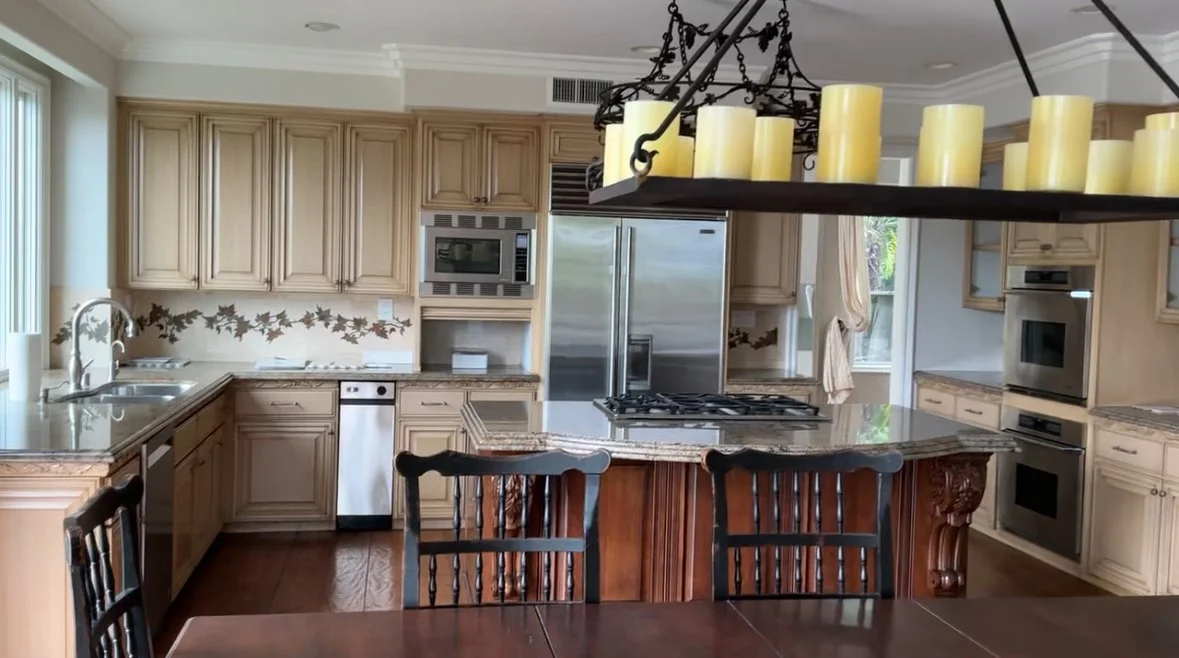
Before: #ClassicCalifornia Project
A large number of homes across Scottsdale, Mesa, and Chandler were built in the late 90s and early 2000s, during a period of rapid growth. Entire neighborhoods were developed with a consistent design language that reflected what felt elevated at the time.
You see it in the details:
Tuscan influence in the architecture
Darker wood cabinetry and heavy millwork
Travertine or stone flooring
Ornate iron and layered finishes
Warm, saturated color palettes
At the time, these choices created a sense of richness and completion. The goal was for a home to feel fully designed the moment you walked in.
And for a while, that worked.
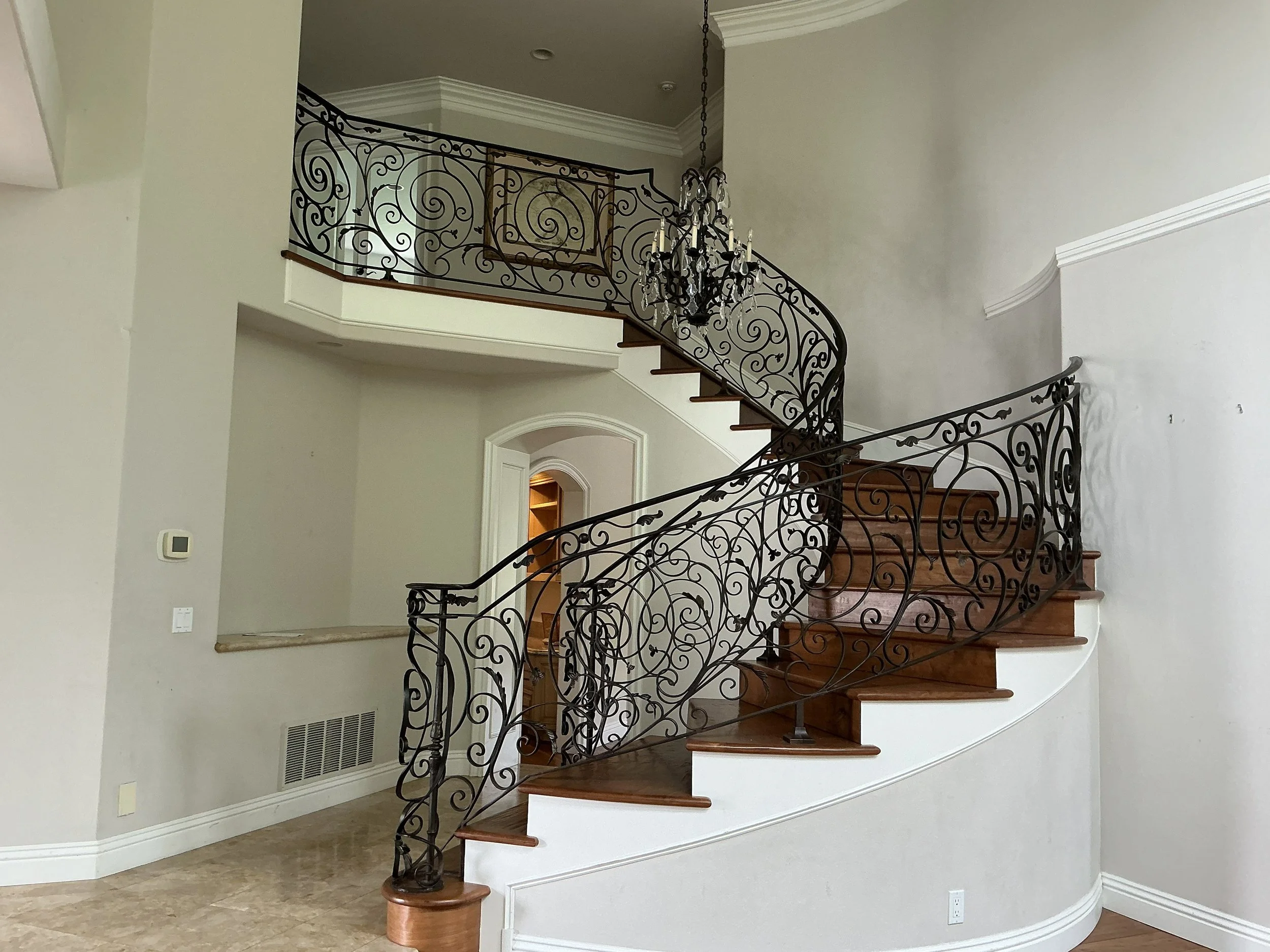
Before: #ClassicCalifornia Project
Where the tension begins is not necessarily in the materials themselves, but in how these homes align with the way people live now.
Over the past two decades, there has been a noticeable shift in what homeowners want from their spaces. Many of the clients we work with across Scottsdale, Mesa, and Chandler are drawn to:
more natural light and openness
clearer visual hierarchy
materials that feel grounded rather than overly polished
homes that support daily life, not just visual impact
When those preferences meet a home that was designed to feel dense, layered, and visually complete, the result is often a quiet but persistent disconnect.
Most clients don’t walk in with a clear list of what needs to change.
Instead, they describe a feeling.
They tell us the home feels heavier than they want it to be, or that it no longer reflects where they are in life. They often assume the issue is a surface-level one, something that can be resolved by updating finishes or starting a remodel.
But in many cases, the problem runs deeper than that.
What we are often seeing is not simply a design issue, but an alignment issue.
The home reflects a version of life that made sense at one point, whether that was when the house was built or when it was first purchased. Since then, priorities have shifted. Daily routines have changed. Personal taste has become more defined.
The home, however, has remained the same.
That gap is what people are feeling.
This is also why simply updating a home or completing a surface-level renovation rarely solves the problem on its own.
Replacing countertops or painting cabinetry may lighten the space visually, but it does not necessarily address how the home functions or how it feels to move through it. Without a more intentional interior design approach, the result can feel like a newer version of the same underlying issue.
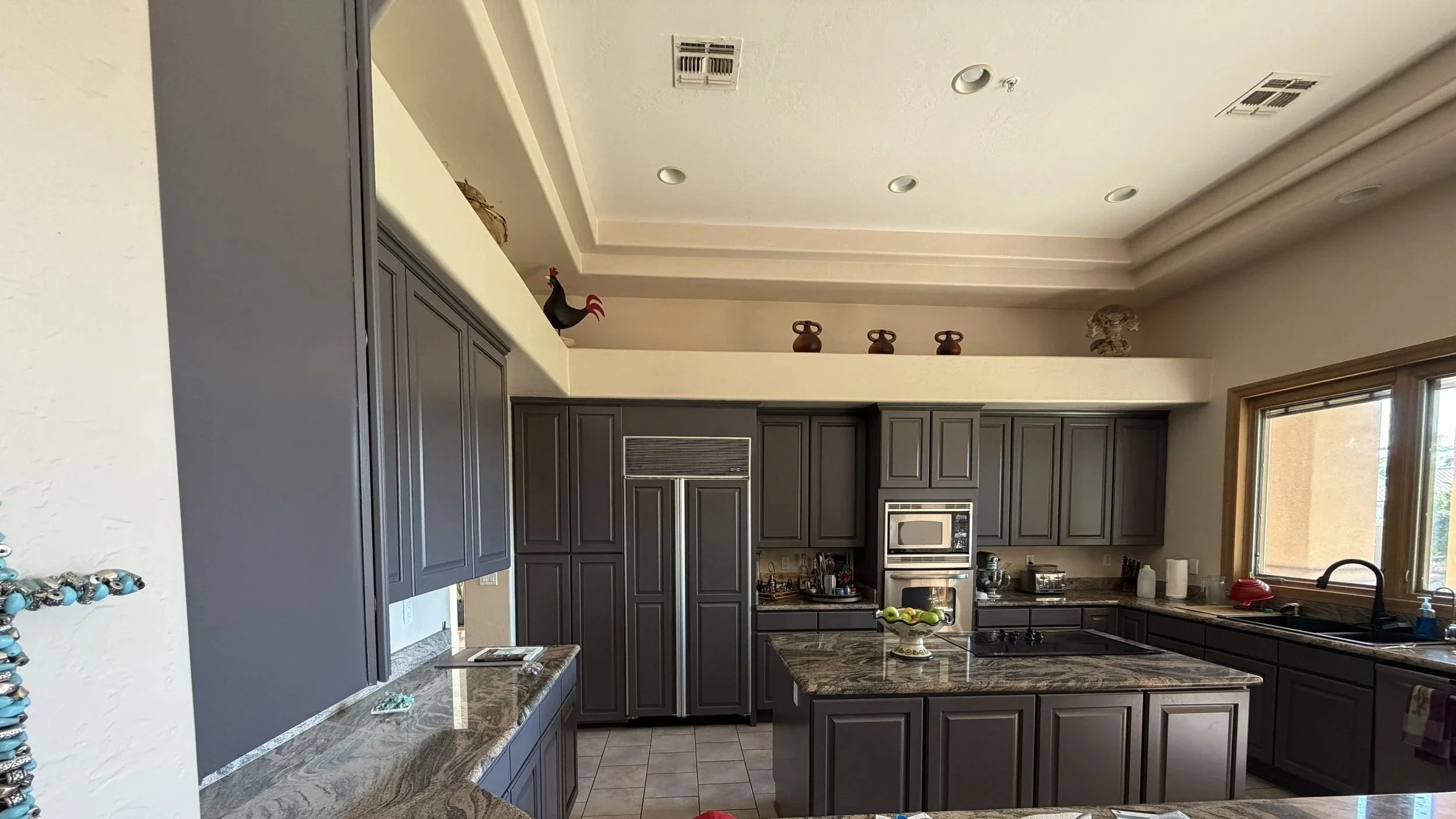
Before: #Aegean Awakening Project
In our work as a full-service interior design studio serving neighborhoods in Scottsdale, Mesa, and Chandler, we spend a lot of time thinking about editing rather than replacing.
That means identifying what still has integrity, architecturally or materially, and allowing it to remain, while removing or reworking the elements that create visual weight or fragmentation.
Often, the transformation comes from:
simplifying competing details
rebalancing materials and contrast
improving how spaces connect and flow
allowing light to move more freely through the home
It is a more measured approach, but it leads to homes that feel significantly more grounded, functional, and enduring.
This conversation shows up especially strongly in these areas.
There is a consistency to the way many of these homes were built, and because of that, a shared feeling clients experience when they begin to outgrow them. The architecture, materials, and layout all reflect a specific moment in time.
Over time, that misalignment becomes more noticeable.
At a certain point, most homeowners come to the same realization.
The issue is not that their home is outdated in a purely aesthetic sense. It is that the home no longer reflects who they are or how they want to live.
Once that becomes clear, the conversation shifts.
It is no longer about chasing a new style, but about creating a home that feels aligned, intentional, and reflective of the life they are living now.
If your home in Scottsdale, Mesa, or Chandler has started to feel this way, it is worth paying attention to.
Not as a sign that something is wrong, but as an indication that something has changed, and your space is ready to evolve with you.
